Exploring the Impact of Possession Stats in Soccer
3 August 2026
Soccer is a game of numbers, but let's be real—possession stats are the life of the party when it comes to analytics. You’ve probably heard commentators throw around phrases like, “They dominated possession,” or “The stats show 70% ball control.” But does holding onto the ball actually win games? Or is it just another fancy number that looks good on paper?
Let's break down the impact of possession stats in soccer—without the boring charts and robotic analysis. Just pure soccer talk, the way it should be!

What Do Possession Stats Really Tell Us?
Possession stats measure how much time a team controls the ball during a game, expressed as a percentage. If a team has 65% possession, it means they had the ball for 65% of the match duration. Sounds simple, right?But here’s the thing—having more possession doesn’t always mean you’re in control. Sometimes, it’s just sideways passing in midfield with no real purpose (side-eyeing you, peak Barcelona). Other times, a team could have only 30% possession but still create more dangerous chances.
The Myth of "Possession Equals Dominance"
If possession stats were everything, Pep Guardiola’s teams would win every single game. But we all know that’s not the case. Soccer is unpredictable. A team can dominate possession yet lose because they failed to convert chances.Remember that famous 2012 Champions League semi-final where Chelsea had only 28% possession against Barcelona? Yeah, they still won and knocked out one of the most dominant possession-based teams in history. Possession alone doesn’t win trophies; efficiency does.

Styles of Play: Possession-Based vs. Counterattacking
Different teams use different approaches, and possession stats heavily depend on their tactical philosophies.Possession-Based Play (a.k.a. The Guardiola Way)
Some teams live and die by the philosophy of "if we have the ball, the other team can't score." Think of teams like:- Manchester City under Pep Guardiola
- Barcelona (especially during the tiki-taka era)
- Bayern Munich (when they decide to pass teams to death)
The goal? Wear down the opposition by constantly moving the ball, controlling the game’s tempo, and waiting for the right moment to strike.
While it works beautifully when executed properly, it also has its flaws. If a team focuses too much on possession but lacks penetration, they might struggle to create clear-cut chances. You can’t win games with meaningless passes, no matter how pretty they look.
Counterattacking Football (The Art of Efficiency)
Then comes the flip side: the teams that say, “You can keep your fancy ball movement; we’ll just hit you on the break.” Think of:- Atletico Madrid under Diego Simeone
- Leicester City’s 2015-16 Premier League winners
- Jose Mourinho’s Inter Milan of 2010
These teams don’t care about possession. They wait, absorb pressure, and strike with precision when given a chance. It’s less about controlling the ball and more about controlling the scoreboard.

The Fine Line Between Possession and Productivity
High possession with no end product is like a chef making a gourmet meal but forgetting to serve it. It might look great, but what’s the point if it doesn’t get the job done?The Spanish National Team’s Dilemma
Spain dominated international soccer from 2008-2012 with their tiki-taka style. But after that golden era, they started to fade. Why? Because they became obsessed with possession without focusing on goal threats. In the 2018 World Cup, Spain had over 75% possession against Russia but managed just nine shots on target in 120 minutes. End result? Knocked out on penalties.When Possession Works Like Magic
On the other hand, possession-based teams have also crushed opponents when they get it right. Manchester City under Guardiola is a perfect example. They dominate possession and create multiple goal-scoring opportunities. The key difference? Purposeful possession.Teams that blend high possession with attacking intent become unstoppable. It’s not about keeping the ball for the sake of it—it’s about using possession as a weapon.

Does More Possession Mean More Wins?
Now, let’s get to the million-dollar question: does high possession lead to more wins?Well… yes and no.
The Case for More Possession
- Teams with higher possession usually have better control of the game.- They face fewer defensive situations because the opposition has fewer chances to attack.
- Studies show that possession-heavy teams generally finish higher in league tables.
The Case Against It
- Possession without penetration is pointless.- Some of the greatest upsets in soccer history have come from teams thriving with low possession.
- The strategy depends on the players; not every team has the technical ability to play possession-based soccer effectively.
Key Takeaways: What Really Matters?
Here’s the bottom line: possession stats mean nothing unless they translate into actual dominance. If your team has 70% possession but only takes two shots on goal, while the opposition has 30% possession and scores twice, guess who goes home happy? Not the team with fancy stats.How Should Teams Approach Possession?
1. Quality over quantity – Possession should lead to goal-scoring opportunities, not just aimless passing.2. Adaptability is key – Teams should be able to switch between possession play and counterattacks when needed.
3. Possession is a tool, not a goal – Winning should always be the primary objective, not having the most passes.
Final Thoughts
So, the next time you hear someone say, “We had 75% possession, how did we lose?”—just give them a friendly reminder: possession stats are like having an expensive car. It’s cool, but if you don’t know how to drive it, it won’t get you anywhere.Soccer is all about balance—the right mix of possession, counterattacks, defense, and, most importantly, putting the ball in the back of the net. The best teams don’t just hold onto the ball; they do something meaningful with it.
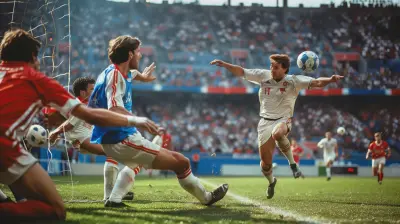
all images in this post were generated using AI tools
Category:
Sports StatisticsAuthor:

Fernando Franklin