Iconic National Team Kits and the Stories Behind Them
5 July 2026
Alright, footie fans, throw on your favorite retro jersey, grab a cold one (or a warm tea, no judgment here), and let’s take a trip down memory lane. We’re diving into the colorful, sometimes wacky, often emotional world of iconic national team kits and the juicy backstories that made them unforgettable.
From Brazil's sunshine yellow to Nigeria’s zig-zag swagger — national team kits aren’t just about looking good (although that's a bonus). They tell stories of pride, rebellion, redemption, and sometimes… questionable fashion choices. So buckle up — this isn’t your average history lesson.
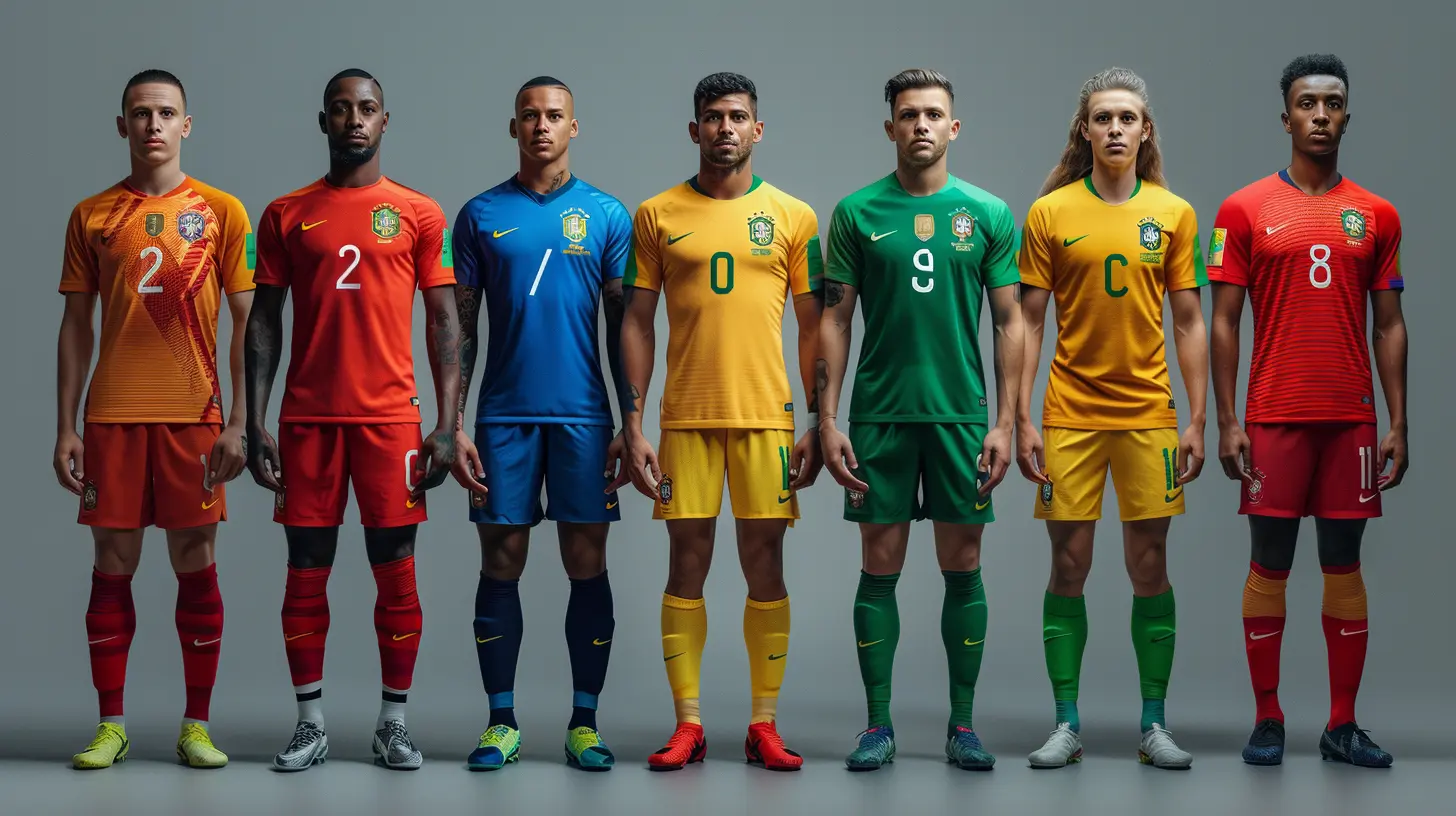
The Brazilian Yellow — Born From Heartbreak
Let’s kick things off with the samba kings themselves — Brazil.Why Is Brazil's Kit Yellow Anyway?
Believe it or not, Brazil didn’t always wear yellow. Gasp!Before 1954, their kit was a drab white — basically the football equivalent of plain toast. But after the devastating loss to Uruguay in the 1950 World Cup final (yep, the infamous Maracanazo), Brazilians were so heartbroken that they blamed the white jersey for not being patriotic enough.
So, what did they do? They held a national competition to redesign the kit. Enter 19-year-old Aldyr Garcia Schlee, who whipped up a dazzling combo of yellow (symbolizing the sun), green (for Brazil’s forests), blue (the sky), and white (peace). The result? A jersey that screams joy and flair — just like their football.
And with five World Cup titles under that yellow banner, we’d say it turned out alright.
The Azzurri — Italy’s Regal Blues
If you’ve ever wondered why Italy rocks blue when their flag is red, white, and green, you’re not alone. It’s like turning up to your wedding in a black hoodie. What gives?A Royal Connection
The answer takes us back to Italy's monarchy days. The House of Savoy, a royal family that unified Italy in the 19th century, had blue as their official color. When Italy’s national team first kicked a ball competitively in 1910, they wore white. But a year later, they switched to Savoy blue — as a nod to their royal past.Fast-forward to now, and the Azzurri (which literally means "the Blues") are one of the most stylish teams in football — both in play and fashion. Let's be honest, they could show up in a potato sack and still look like they stepped off a Milan runway.
Argentina’s Sky Blue and White — More Than Just Stripes
Ah, Argentina — the land of tango, Messi, and proper football drama.Symbolism in Every Stripe
Their iconic sky blue and white stripes aren’t just for aesthetics. They mirror the flag, which symbolizes the clouds parting over a hopeful nation. Originally debuted in 1908, this design has largely stayed consistent — a rare thing in football fashion.But here’s the kicker: in the 1986 World Cup (yes, that one), Argentina forgot to bring their away kit. Whoops. So for the quarterfinal against England (cue the Hand of God), they had to scramble.
What did they do? They bought blank blue shirts from a local store, ironed on some logos, threw on silver numbers, and boom — history was made. That makeshift kit is now one of the most iconic jerseys ever. From a thrift shop to World Cup glory — talk about an underdog tale!
The Oranje — Dutch Brilliance in Orange
The Netherlands — where bicycles outnumber people and football is an art form.But... Why Orange?
Again, the flag has no orange. Still, the Dutch turn up looking like tangerines every time. Why? It’s all because of William of Orange, a 16th-century royal who led the Dutch to independence. Orange became the national color — and a symbol of unity and pride.Even when the team’s performance doesn’t quite match their style (we’re looking at you, 2010), they always look like champions. Bonus: it’s nearly impossible to miss Dutch fans in the crowd. They light up the stands like a human traffic cone army.
England’s Three Lions and White Pride
Let’s talk about England, the self-proclaimed inventors of the beautiful game.White Kits, Heavy Expectations
England’s traditional white kit is as clean and classic as a Sunday roast. It reflects purity, simplicity, and the ever-present hope that “football’s coming home.” (Spoiler: it usually just takes a detour.)Now, that Three Lions crest? That’s where the real story is. It dates back to King Richard the Lionheart, who slapped three golden lions on his royal arms in the 12th century. Since then, it’s become a symbol of English football faith. Every time England players put on that shirt, they're dragging centuries of royal baggage and pub-fueled expectations along for the ride.
Nigeria’s 2018 World Cup Kit — Fashion Meets Football
Now let’s talk sizzle. Nigeria’s 2018 kit didn’t just break the internet — it torched it.Style So Good It Sold Out (Immediately)
This neon green masterpiece with white feather patterns took the world by storm. Designed by Nike, it sold out within minutes of its release. It became so popular, it had people who’ve never watched a match in their life scrambling to get one.What made it iconic wasn’t just the bold design. It was the unapologetic celebration of Nigerian culture and swagger. The Super Eagles turned the pitch into a runway, and even though they didn’t make it out of the group stage, they won fashion’s World Cup.
France’s Bleu, Blanc, Rouge — Liberty and Les Bleus
You can’t talk kits without giving a nod to France.Tricolor in Spirit
Les Bleus mainly wear blue (obviously), but the red, white, and blue of the French flag always sneaks into the design. Their kit screams elegance — just like their playmakers.But the 1998 version? Legendary. Zidane’s bald head shone like a beacon under that horizontal-striped beauty as France lifted the World Cup on home soil. The kit was simple, patriotic, and powerful — a jersey for the ages.
Germany’s Black And White — Organized, Classy...Very German
Leave it to Germany to keep things sleek and sensible.What's With the Lack of Color?
Despite the flag rocking black, red, and gold like a proper 80s mixtape cover, Germany’s traditional kit is black and white. No, it's not because they’ve got something against color — it’s a nod to Prussia. (Yep, old-school regional power plays.)Germany’s kits are usually minimal, but they’ve had their moments. Just look at the 1990 zig-zag design — worn when they won the World Cup. It screamed 90s graphic designer energy, but it worked.
Croatia’s Checkerboard — A Kit No One Can Miss
Ah yes, Croatia. Even if you’re squinting at a black-and-white TV from 1974, you can’t miss their red-and-white checkerboard shirts.Patterned With Purpose
The checkerboard isn’t just a quirky style choice; it’s rooted in the national coat of arms, representing centuries of Croatian heritage. It debuted in the early '90s, right after they gained independence, and has since become one of the most recognizable kits on Earth.And let’s be honest — it kind of looks like a fast-food tablecloth, but they rock it with pride. When Luka Modrić and co. made it to the World Cup final in 2018, that kit became legendary. Chessboard vibes, world-class flair.
Cameroon — Sleeveless Rebellion
Now for some edge: Cameroon’s 2002 kit by Puma.Shirts Without Sleeves...On Purpose
Cameroon shocked everyone (especially FIFA) when they turned up rocking sleeveless kits in the African Cup of Nations. Think basketball meets football. It was bold. It was rebellious. It was… banned.FIFA said jerseys need sleeves, so what did Cameroon do? They added fake ones. Sewn on. Like a Halloween costume fix. FIFA wasn't amused, but fans loved it.
The stunt made Cameroon legends of kit culture. They didn’t win the Cup that year, but they won our hearts with pure fashion defiance.
Japan’s Anime-Inspired Artistry
Japan often flies under the kit radar, but not anymore.Samurai Blue With an Artistic Twist
Their 2022 World Cup kit, inspired by origami and anime art, was a blend of tradition and modern flair. Subtle patterns reflected Japanese fabric design, and the whole thing just oozed cool. They even had a collab with the manga “Blue Lock.” (We’re not saying anime fans are now football fans... but we’re not not saying it.)It’s a prime example of how a kit can reflect a nation’s culture without being “in-your-face.” Stylish? Yes. Subtle? Also yes. A+ for creativity.
USA — Stars, Stripes, and... Confusion?
Ah, Team USA — always trying something new.A Kit Identity Crisis
Over the years, the U.S. has had some kit gems (‘94 denim-looking disaster, anyone?) and some you’d rather forget. But the theme is always red, white, and blue — sprinkled with either a patriotic vibe or a Nike experiment gone wild.Still, when the stars align, like in the 2002 World Cup run, those simple kits become iconic. Because sometimes, looking like a literal flag isn’t the worst thing if you’re gonna shock the world.
Final Whistle: More Than Just Fabric
From Brazil’s redemption yellow to Croatia’s checkerboard charm, national team kits are more than just gear — they’re stories stitched into fabric. They carry heartbreaks, triumphs, political statements, and fashion risks.So next time you see a jersey, don’t just admire the colors — think about the story it’s telling. Behind every stitch is a saga of identity, pride, and that dream of lifting silverware.
And hey, if you wear a national team kit to the grocery store and someone yells “GOAL!” — you’re doing it right.
all images in this post were generated using AI tools
Category:
National TeamsAuthor:

Fernando Franklin
Discussion
rate this article
1 comments
Sarah McIntyre
These kits hold so much history and passion. Each thread tells a story that unites fans forever.
July 9, 2026 at 4:16 AM