The Evolution of the Set Piece in National Team Play
17 July 2026
Set pieces have always been a crucial part of football. Whether it's a free kick, a corner, or a well-crafted throw-in, these moments can turn the tide of a match in an instant. Over the years, national teams have continuously refined their approach to set pieces, turning them into lethal weapons that can secure victory on the biggest stages. But how did we get here? How have teams evolved their strategies to make set pieces such a key factor in modern football? Let's dive into the fascinating journey of set-piece evolution in national team play. 
The Early Days: Simplicity at Its Best
Back in the early days of international football, set pieces were fairly straightforward. Free kicks were often just a hopeful swing at goal, corners were floated into the box without much thought, and throw-ins? Well, they were mostly used to restart play rather than create goal-scoring opportunities.During the early World Cups, teams relied on raw skill and individual brilliance rather than carefully planned routines. Sure, you'd see the occasional stunning free kick, but there wasn't much of a tactical approach behind them. It was all about instinct and execution.
But football, like any sport, evolves. Coaches started realizing that set pieces could be more than just a way to restart play—they could be an opportunity. 
The Rise of Tactical Awareness in Set Pieces
As football developed, so did national teams' tactical awareness. By the 1970s and 80s, teams were beginning to experiment with more structured approaches to set pieces. Rather than just crossing the ball into the box and hoping for the best, teams started implementing rehearsed routines.This was the era when defensive marking schemes also advanced. The introduction of zonal and man-marking systems forced attacking teams to devise more creative ways to break through defenses. Suddenly, set pieces became intricate, chess-like battles rather than simple restarts.
One of the pioneers in set-piece strategy was the great Dutch "Total Football" squad of the 1970s. They brought movement, intelligence, and deception into play, ensuring their set pieces weren’t just hopeful crosses but well-planned attacks. 
The 1990s and Early 2000s: Fine-Tuning the Art
By the 1990s, teams had begun spending considerable training time on set pieces. This was a period of refinement. Players like David Beckham became specialists, capable of scoring free kicks with pinpoint accuracy. Teams also started utilizing towering center-backs to add aerial dominance during corners and free kicks.The early 2000s saw a rise in meticulously planned routines. Training sessions increasingly focused on set-piece drills, with teams reviewing footage of opponents to identify weaknesses. National teams realized that set pieces could win tournaments—just look at Brazil’s 2002 World Cup-winning squad, which capitalized on dead-ball situations to create crucial chances.
This period also saw a shift in defensive organization. Teams placed greater emphasis on goalkeepers commanding their areas and defenders being strategically positioned to clear dangerous deliveries. 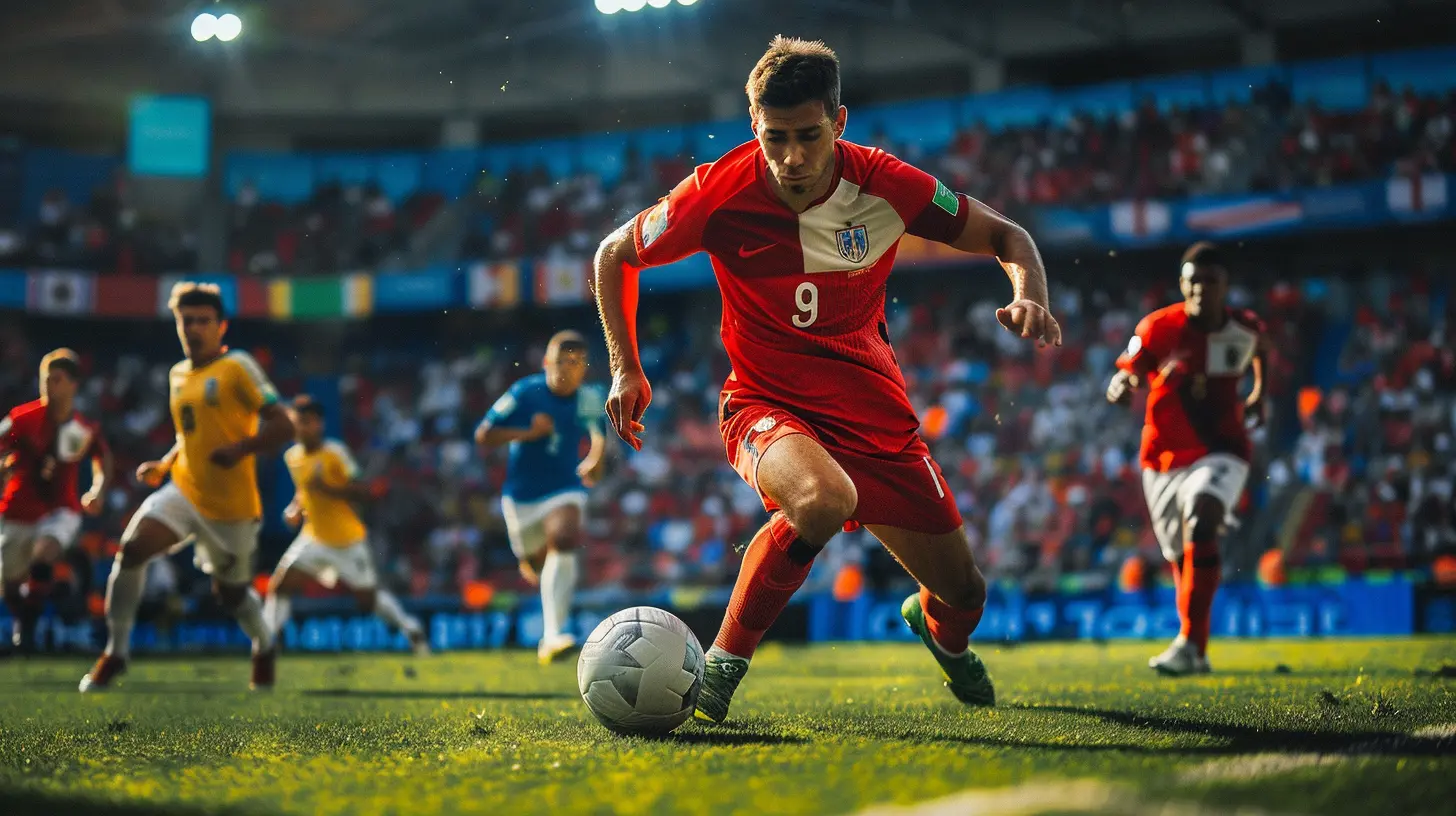
The Modern Era: Precision and Science Take Over
Fast forward to today, and set pieces have become an art form. The level of detail involved is astonishing. National teams now have dedicated set-piece coaches, data analysts who study opponents' weaknesses, and players who spend hours perfecting their free kicks, corners, and throw-ins.One of the best examples of modern set-piece efficiency was England's performance in the 2018 FIFA World Cup. Nearly half of their goals came from set pieces, thanks to their well-rehearsed routines, clever movement, and pinpoint deliveries. The "Love Train" corner routine, where multiple players lined up to confuse defenders before making decisive runs, was one of the most talked-about strategies of the tournament.
Teams today use technology like tracking data, heat maps, and performance analysis to gain every possible advantage in set-piece situations. Free kicks aren’t just about the taker's ability anymore; they're about using decoys, positioning players optimally, and even using psychology to unsettle goalkeepers and defenders.
Why Set Pieces Matter More Than Ever
In modern football, where defenses are more structured than ever, breaking down an opponent in open play can be tough. This is why set pieces have become a golden opportunity for national teams to score goals.A well-executed corner or free kick can be a game-changer, especially in knockout tournaments where margins are razor-thin. It’s often not the most dominant team that wins—it’s the team that makes the most of its chances. And set pieces? They're a prime opportunity to tilt the balance in your favor.
Think about it—teams spend hours perfecting their build-up play, but a single set-piece goal can decide a match. That’s why teams invest heavily in this area, knowing that a free kick or corner could be the difference between glory and heartbreak.
What’s Next for Set Pieces?
So, where do we go from here? With the continued rise of technology, data, and tactical innovation, set pieces are only going to become more sophisticated. Expect to see even more complex routines, better ball-tracking technology to analyze movement patterns, and perhaps even AI-assisted strategy development.Innovation never stops in football. The biggest teams are always looking for new ways to gain an edge, and set pieces will remain a key battleground for success.
Final Thoughts: Set Pieces Are Here to Stay
Set pieces have come a long way from the days of simple crosses and hopeful shots. Today, they are carefully designed and executed with precision, often becoming the defining moments of major international tournaments.For national teams, mastering set pieces isn’t just a luxury—it’s a necessity. In an era where every small detail matters, the ability to capitalize on dead-ball situations can be the difference between lifting a trophy and going home empty-handed.
So, the next time you're watching a major tournament, pay close attention to the set pieces. Behind every goal from a free kick or corner lies hours of planning, training, and tactical brilliance. And who knows? The next evolution of set pieces might just be around the corner.
all images in this post were generated using AI tools
Category:
National TeamsAuthor:

Fernando Franklin