Why Some National Teams Struggle Despite Talent-Rich Rosters
11 March 2026
Let’s paint a picture: You’ve got a national football (or soccer, depending on your side of the pond) team stacked with world-class talent. We’re talking Golden Ball contenders, Champions League regulars, legends in their prime. On paper, they look like the Avengers—ready to crush opponents one match at a time.
And then... the tournament starts.
They barely scrape by in the group stages, bumble into the knockouts, and get booted out by teams most fans can’t even spell without a Google search.
Sound familiar?
So, what’s going on? Why do some national teams, packed with A-list stars, flop harder than a striker looking for a penalty? It’s not just bad luck or a shady referee. There's science, psychology, and a healthy dose of “WTH just happened" all wrapped up in that meltdown.
Let’s dig into the not-so-beautiful side of the beautiful game.
The Curse of Too Much Talent
Ever heard the phrase “too many cooks spoil the broth”? Well, in football terms, it's “too many stars break the system.”Picture this scenario: You’ve got five creative geniuses, all itching to be the playmaker. Only one ball. It’s like trying to have five DJs at a party, each fighting to spin their track. Chaos.
When you cram a squad with elite talent, you run into ego clashes, conflicting playing styles, and an unhealthy obsession with being “the main guy.” These athletes shine at club level because they’re usually the focal point. But when everyone’s elite, who takes the spotlight?
Sometimes, the team ends up playing like a disjointed mess of solo acts at a talent show, rather than a tight-knit group harmonizing like a boy band comeback tour.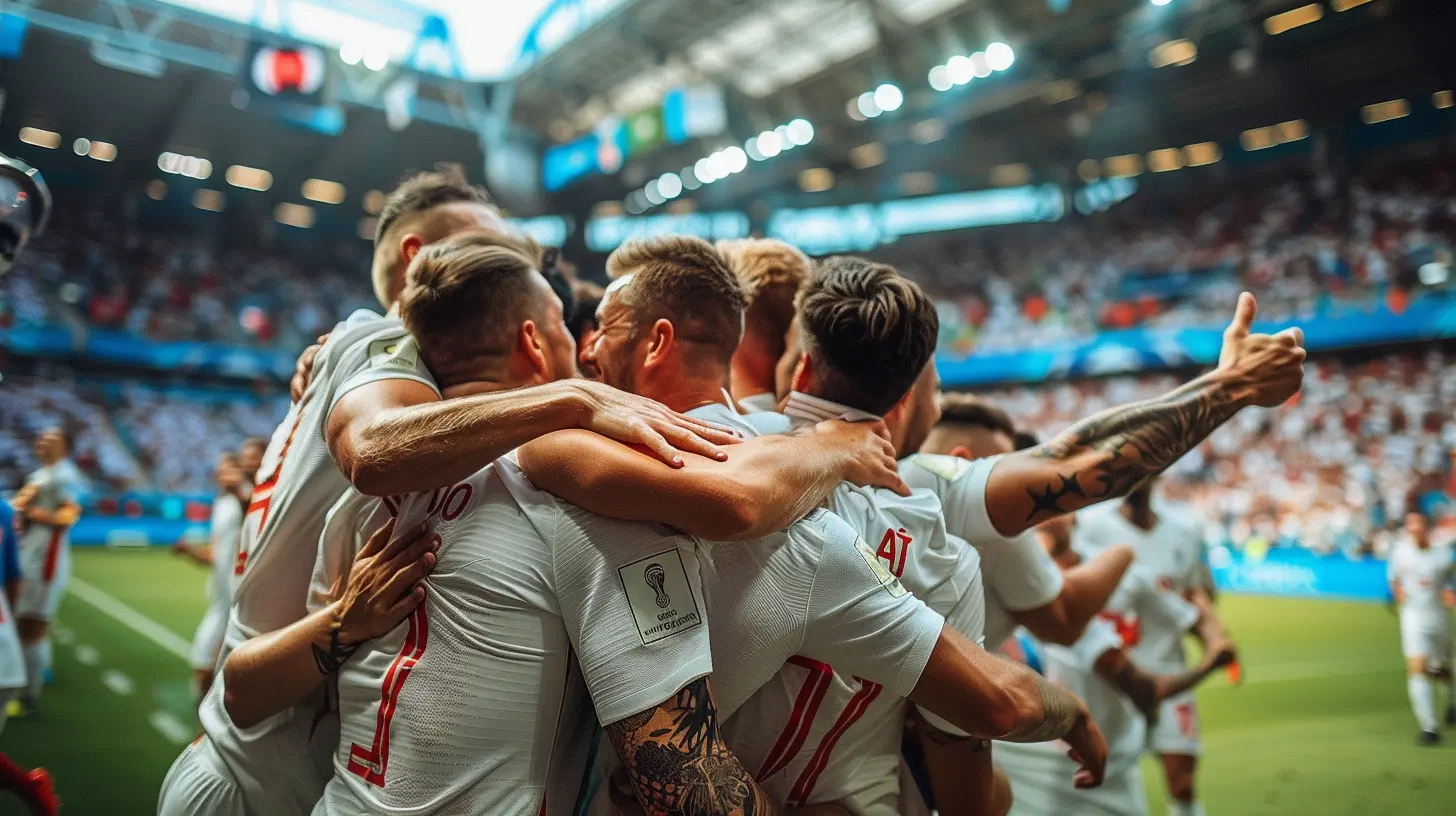
Club Chemistry vs. National Mayhem
Let’s talk time. Club teams train together almost daily. They've got months to develop chemistry, work on tactics, and basically read each other’s minds on the pitch.Now compare that to national teams.
They meet for a few days here and there, squeeze in a couple of friendlies, and—bam—it’s tournament time. Expecting them to gel instantly is like expecting your New Year’s resolutions to last past January. Spoiler: they usually don’t.
The lack of consistent playing time together means players struggle to sync. It’s like throwing 11 top chefs into a kitchen and expecting them to whip up a five-star meal in 20 minutes—without a recipe. Sometimes, genius emerges. But more often than not, it’s a plate of burnt spaghetti and bruised egos.
The Tactical Tug-of-War
Here’s another kicker—club vs national tactics.If you watch international football long enough, you've noticed that some teams look painfully boring or clueless. That’s not (always) because of bad players. It’s because their club systems are lightyears ahead of their national team tactics.
Imagine spending every week perfecting high-press, tiki-taka or gegenpress at your club. Then suddenly, you're thrown into a setup where the coach wants to “park the bus” but with flair. Yeah, good luck with that.
Some national coaches try to force square pegs into round holes. Superstars are asked to play out of position, sacrifice their style or follow instructions that make absolutely zero sense for their skill set. That’s like asking Lionel Messi to win headers like Peter Crouch. Spoiler alert: he probably won’t.
The Psychology of Pressure (AKA “Choker Syndrome”)
Talented players are humans too. (Shocking, I know.)And when you’re wearing your national jersey, the pressure is relentless. Suddenly, you’re not just playing for three points—you’re carrying the hopes and dreams of an entire country. Grandma’s tuned in. The president’s watching. Your old math teacher even posted a “Go get 'em!” tweet.
It’s a mental minefield.
Some players wilt under the spotlight. They overthink. They try too hard to be the hero or play it too safe. That killer instinct they have at club level? Gone. Replaced by nerves, self-doubt and the overwhelming fear of becoming a meme.
You can’t coach that away in a weekend training camp. And you definitely can’t substitute a sports psychologist mid-match.
Leadership Vacuums (Who's the Boss?)
Every great team needs a leader—someone who can rally the troops when things go south. But great talent doesn’t always come with great leadership. Being good at football doesn’t automatically mean you’re a locker room general.Some national teams are stacked with stars but lack a clear leader. Or worse, they have too many wannabe leaders, each pulling in a different direction like a group project with no group chat.
Without a unifying voice, the team becomes a mess of mixed signals and passive vibes. Who motivates the squad when they’re 1-0 down with 10 minutes to go? Who calms everyone after a ref’s dodgy call? That voice matters more than fans realize.
Internal Politics & Drama (Soap Opera FC)
Nothing derails a talented national team faster than drama.Sometimes it’s coach vs captain. Other times, it’s players beefing with each other over starting spots, hairstyles, or even post-match social media likes. The locker room turns into a reality TV set, and the football? It becomes an afterthought.
National teams don’t have the strict organizational structures of club squads. What you often get is a melting pot of regional tensions, media scrutiny, favoritism accusations, and the occasional scandal (we see you, France 2010).
If you think this has no effect on the pitch, think again. Poor unity equals poor performance. Team spirit can't be faked—especially when millions are watching.
The Coach Conundrum
Let’s not forget the person pulling the strings.National team coaches are a curious breed. Some are tactical masterminds. Others... not so much. And unlike clubs, where a bad coach gets the boot fast, national teams often stick with them out of loyalty, limited options, or fear of change mid-qualifiers.
And then there are the coaches trying to play 2005-style football in 2024. Newsflash: Long balls and hope aren’t strategies anymore. You can’t outlast modern elite teams with a playbook last updated during the dial-up internet era.
If your coach is more outdated than a Blockbuster card, no level of talent will save your campaign.
Injuries and Fatigue – The Silent Game Killers
Elite players log insane minutes all year. From league matches to cup ties, Champions League marathons and then some international friendlies tossed in for fun. By the time summer tournaments roll around, most are running on fumes.Sure, they show up—but often at 70%. And that’s assuming they’re not already injured or carrying a knock.
Some national teams never field their “Best XI” because half the guys are hobbling around during warmups. Too much talent? Sure. But talent on crutches doesn't win games.
The "Name on the Back" Problem
In club football, coaches can bench anyone. Doesn’t matter if you're a star—if you’re out of form, you hit the pine.National sides? Not so easy.
There’s often pressure to pick big names, even if they’re past their peak or out of shape. It becomes a political tightrope. Drop a fan favorite, and the press will roast you like a Thanksgiving turkey. Start them, and they play like it's their farewell tour.
Coaches are stuck between doing what’s right and doing what’s popular. Spoiler: Popular doesn’t win trophies.
Cinderella Stories Are Just Better
Let’s be real—football is unpredictable. It’s what makes us love it (and scream at our TVs).Sometimes, the underdog playing with hunger, unity, and belief will triumph over the blinged-out superstars. Think Iceland, Croatia, or Morocco. These teams don’t care about your fancy player ratings. They’ll outwork, outfight, and out-heart anyone.
And that’s the magic of it all.
Talent doesn’t guarantee success. It helps, of course, but trophies go to the most complete teams—not just the fanciest individuals.
Final Whistle: Talent Isn’t Everything
So next time you see a star-studded national team crash out early, don’t be too shocked.Behind the scenes, it’s a chaotic cocktail of egos, pressure, time constraints, tactically confused lineups, mental fatigue, and possibly a group chat fight over who gets aux cord privileges on the team bus.
Talent wins matches. But team spirit, smart coaching, chemistry, and cool heads win tournaments.
And that, my friend, is why some national teams stumble—even when their rosters look like a FIFA Ultimate Team dream.
all images in this post were generated using AI tools
Category:
National TeamsAuthor:

Fernando Franklin
Discussion
rate this article
2 comments
Harvey McVicker
Interesting perspective! I'd love to explore how team dynamics and leadership impact performance beyond talent.
April 3, 2026 at 12:00 PM
Fernando Franklin
Thank you! Team dynamics and leadership are crucial for unlocking potential and fostering cohesion, which can significantly influence performance. Exploring these factors can reveal deeper insights into team success.
Ronan Estes
Talent alone doesn't win matches; it’s the synergy, strategy, and team chemistry that create champions. Sometimes, individual brilliance clashes with collective effort, leaving potential unrealized on the biggest stages.
March 12, 2026 at 4:49 AM
Fernando Franklin
You make an excellent point. Talent can shine, but without unity and a solid game plan, it often falls short in crucial moments. Teamwork truly makes a difference.