Sabermetrics: The Hidden Language of Baseball
28 June 2026
Baseball fans love stats. Batting averages, RBIs, home runs—we’ve been quoting them for generations. But if you’ve ever heard terms like WAR, OPS+, or FIP tossed around and felt like someone was speaking a different language, you’re not alone. That, my friend, is sabermetrics—the hidden (but incredibly powerful) language of baseball.
Let’s break it down together, and you’ll see why this once-underground baseball strategy is now a game-changer that even casual fans can get behind.
What Is Sabermetrics, Anyway?
Let’s start at square one. Sabermetrics is the analytical, evidence-based approach to understanding and evaluating a baseball player’s performance. Think of it as the “Moneyball” way of looking at the game. Instead of relying on traditional stats and gut feelings, sabermetrics dives deep into raw data to uncover hidden value and insights.The term itself comes from SABR—the Society for American Baseball Research. Essentially, it’s baseball’s version of going from instinct to intelligence.
Pretty cool, right?
Why Traditional Stats Just Don’t Cut It Anymore
We’ve all grown up quoting batting averages and earned run averages (ERA). And while those aren’t completely useless, they only tell part of the story—like reading just a sentence of a whole novel.Take batting average, for example. It simply measures hits divided by at-bats. But what about walks? Power? Clutch performance? That’s where sabermetrics steps in and fills in the gaps.
Imagine trying to judge a movie only by its box office numbers. You’d miss the acting, the direction, the storytelling. Same with baseball—old-school stats miss a lot of nuance.
The Roots of the Revolution: Enter Billy Beane and Moneyball
You’ve probably heard of Billy Beane and the Oakland Athletics. If not, here’s a crash course.In the early 2000s, faced with budget constraints and an uneven playing field against big-market teams like the Yankees and Red Sox, Beane turned to sabermetrics. Instead of chasing headline players, he focused on undervalued stats—as explained in Michael Lewis’ “Moneyball.”
What happened? The A’s, with a shoestring budget, started winning... a lot.
That sparked a revolution. Today, every MLB team uses some form of sabermetric analysis when evaluating talent.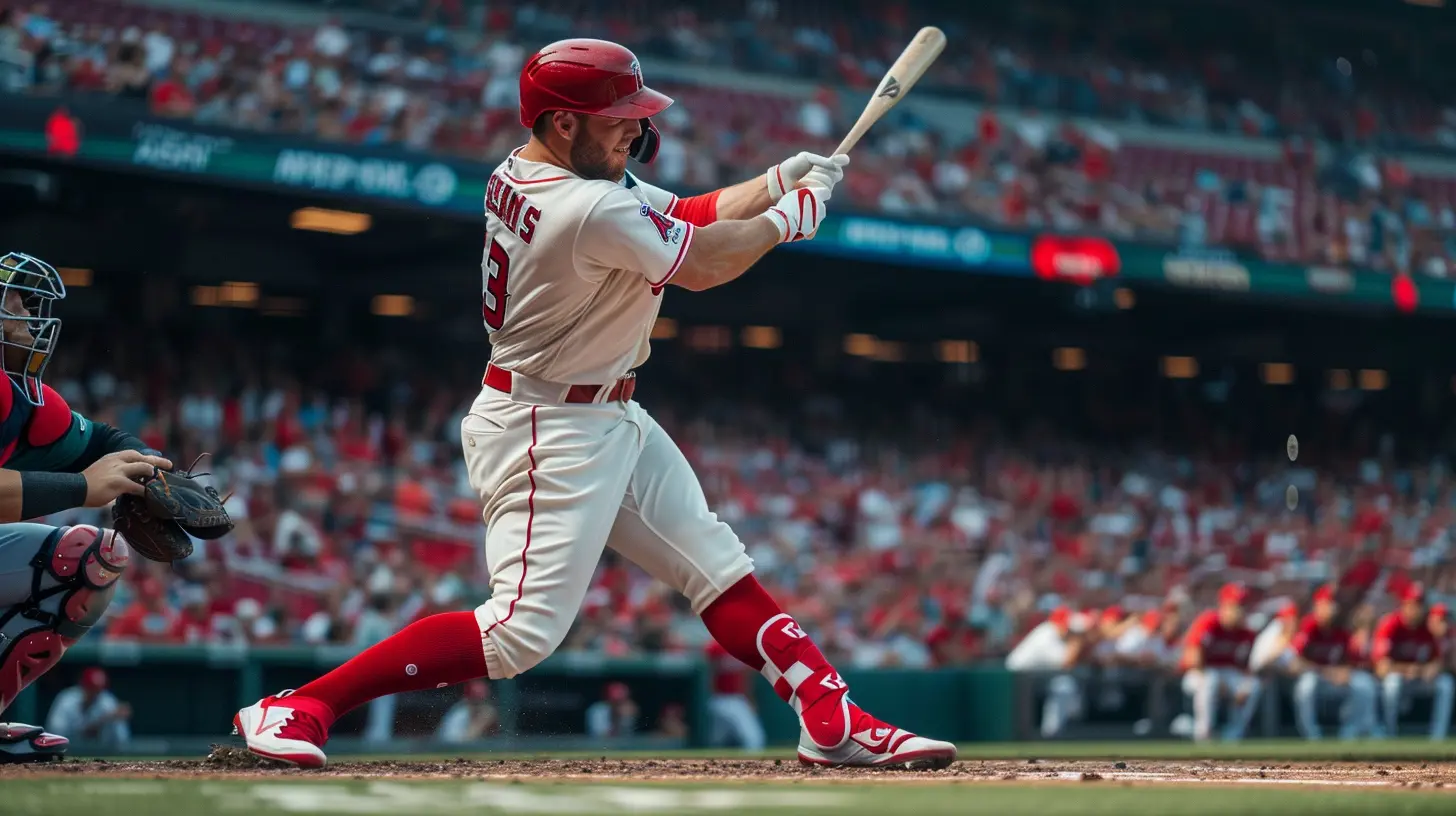
The Key Sabermetrics Stats You Should Know
Alright, let’s break down some of the most popular and powerful sabermetrics stats—without making your brain hurt.WAR (Wins Above Replacement)
Think of WAR as one number to rule them all. It estimates how many more wins a player brings to a team compared to a replacement-level player (basically, a benchwarmer or minor leaguer). The higher the WAR, the more valuable the player.- 0-2 WAR: Role player
- 2-4 WAR: Starter
- 5+ WAR: All-Star or MVP caliber
OPS and OPS+
OPS stands for On-base Plus Slugging. It combines how often a player gets on base (OBP) with how powerful they hit (SLG). It's simple but effective.OPS+ adjusts for ballparks and league averages. 100 is league average. Anything over 100 is above average.
FIP (Fielding Independent Pitching)
For pitchers, ERA can be misleading since it’s affected by fielding. FIP focuses only on what the pitcher can control—strikeouts, walks, hit-by-pitches, and home runs. It’s a better measure of a pitcher’s true performance.wOBA (Weighted On-base Average)
This stat gives proper value to different ways of getting on base. A double is worth more than a walk, and a homer even more. It’s a refined version of OBP.BABIP (Batting Average on Balls in Play)
This one is a little funky but useful. It measures how often batted balls (excluding home runs) go for hits. If a player has a ridiculously high or low BABIP, luck might be a factor.How Sabermetrics Impacts Team Building
Now that almost every front office has a data science department, sabermetrics has changed how rosters are built.Gone are the days of shelling out millions for a high batting average. Teams now look deeper. Is that player drawing walks? Do they hit for power in clutch moments? Are they consistent regardless of opposing pitchers?
Teams like the Tampa Bay Rays and Cleveland Guardians have stayed competitive with smaller payrolls by digging into sabermetric gold and finding diamonds in the rough.
Defense Isn’t Left Out Either
Believe it or not, sabermetrics isn’t just about offense and pitching. Defense has gotten a dramatic makeover too.Metrics like:
- UZR (Ultimate Zone Rating)
- DRS (Defensive Runs Saved)
- OAA (Outs Above Average)
…show how much value a player adds or subtracts with their glove. So your favorite shortstop might look smooth, but is he actually saving runs? These stats can tell you.
How Sabermetrics Help Fantasy Baseball Players Dominate
Here’s a fun little advantage: If you play fantasy baseball, sabermetrics is your not-so-secret weapon.Using stats like xFIP (Expected FIP), Barrel% (how often a batter hits the ball on the sweet spot), or Hard Hit Rate, you can target breakout players before anyone else sees them coming.
You’re not just playing the game—you’re outsmarting it. That’s what sabermetrics lets you do.
The Critics and Limitations
Of course, not everyone is sold on sabermetrics.Some traditionalists argue that baseball isn’t meant to be played on spreadsheets. They say it takes the "heart" out of the game. Fair enough. Baseball is as much about feel, chemistry, and momentum as it is about numbers.
And yes, sabermetrics can be dense and intimidating. Even the most advanced metrics can't fully measure leadership, hustle, or game awareness.
But here’s the truth: You don’t have to choose one side or the other. Sabermetrics isn’t about replacing the human side of baseball. It’s about enhancing it.
Sabermetrics in Action: Real-World Examples
Let’s look at how sabermetrics has made real impact.Example 1: Josh Donaldson
Before he became an MVP, Donaldson was a little-known catcher working on his game. But analysts digging into his underlying numbers saw potential in his power and plate discipline. Fast forward a couple of years—he’s among the game’s elite.Example 2: Jacob deGrom
Traditional pitching stats don’t always tell the story. DeGrom’s win-loss record might look average some seasons, but his FIP, strikeout rate, and WHIP (walks and hits per inning pitched) would tell you he’s a generational talent.So, How Do You Use Sabermetrics as a Fan?
You don’t need a degree in statistics to appreciate sabermetrics. Here's how you can start dipping your toes:- Check Fangraphs or Baseball Savant: These sites break down advanced metrics in easy formats.
- Compare WAR Across Positions: See how your favorite player stacks up.
- Look at trends: Who’s improving in walk rate? Who’s suddenly hitting more line drives?
It’s not about memorizing every stat—it’s about watching the game with a sharper lens. You'll notice things others miss. And that’s what makes it so fun.
The Future of Sabermetrics
Believe it or not, we’re just scratching the surface.With technology like Statcast tracking every pitch, swing, and sprint, the next frontier includes things like:
- Exit velocity
- Launch angle
- Sprint speed
- Pitch spin rate
There’s even talk of using AI to predict performances and in-game decisions. It’s like sci-fi meets baseball.
But amid all the high-tech tools, the goal stays the same—understanding the game better and smarter.
Final Thoughts: Sabermetrics for the Win
Baseball isn’t just a game anymore—it’s a data playground. And sabermetrics? That’s the decoder ring that unlocks the secrets beneath the surface.It doesn’t matter if you’re a die-hard fan, a rookie, or a fantasy league junkie. Once you embrace the advanced stats, you’ll never watch the game the same way again.
You don’t need to abandon batting averages or RBIs. Just add a little WAR, wOBA, and FIP to the mix.
Trust me—it’s like moving from black-and-white to full-color HD.
all images in this post were generated using AI tools
Category:
Sports StatisticsAuthor:

Fernando Franklin
Discussion
rate this article
1 comments
Hudson Reese
Sabermetrics: where math meets baseball and nerds rejoice!
June 29, 2026 at 3:39 AM
Fernando Franklin
Absolutely! It's fascinating how numbers can reveal so much about the game we love.