The Impact of Three-Point Shooting Percentages on NBA Results
22 May 2026
Let’s face it—basketball isn’t what it used to be. Gone are the days where the paint was king, and big men ruled the court. Nowadays, the NBA is practically a three-point shootout.
Three-pointers have completely flipped the script. Teams aren’t just using it as a situational weapon anymore—it’s become the heart of their offense. And as much as we love a good mid-range jumper or a fancy post move, it’s clear the three-point line is where games are being won and lost.
But how exactly do three-point shooting percentages affect NBA results? Is it just about chucking up more shots beyond the arc? Or is efficiency the real game-changer? Grab your favorite jersey and let’s break it all down.
The Evolution of the Three-Point Shot
A Brief History Lesson
When the NBA introduced the three-point line in the 1979-80 season, it was more of a novelty than anything else. Players dipped their toes in the water, but no one was diving in. For years, teams tried to balance it with the traditional style—pounding it inside, isolating star players, and letting mid-range shots fly.Fast forward to today, and it’s a full-blown three-point revolution. Teams are taking more threes than ever before. In fact, the league is averaging over 35 three-point attempts per game, per team, in recent seasons. That’s wild compared to the early 2000s where 15 attempts per game was standard.
Why the shift? Well, analytics happened. And they told us what now feels obvious: three points are worth more than two.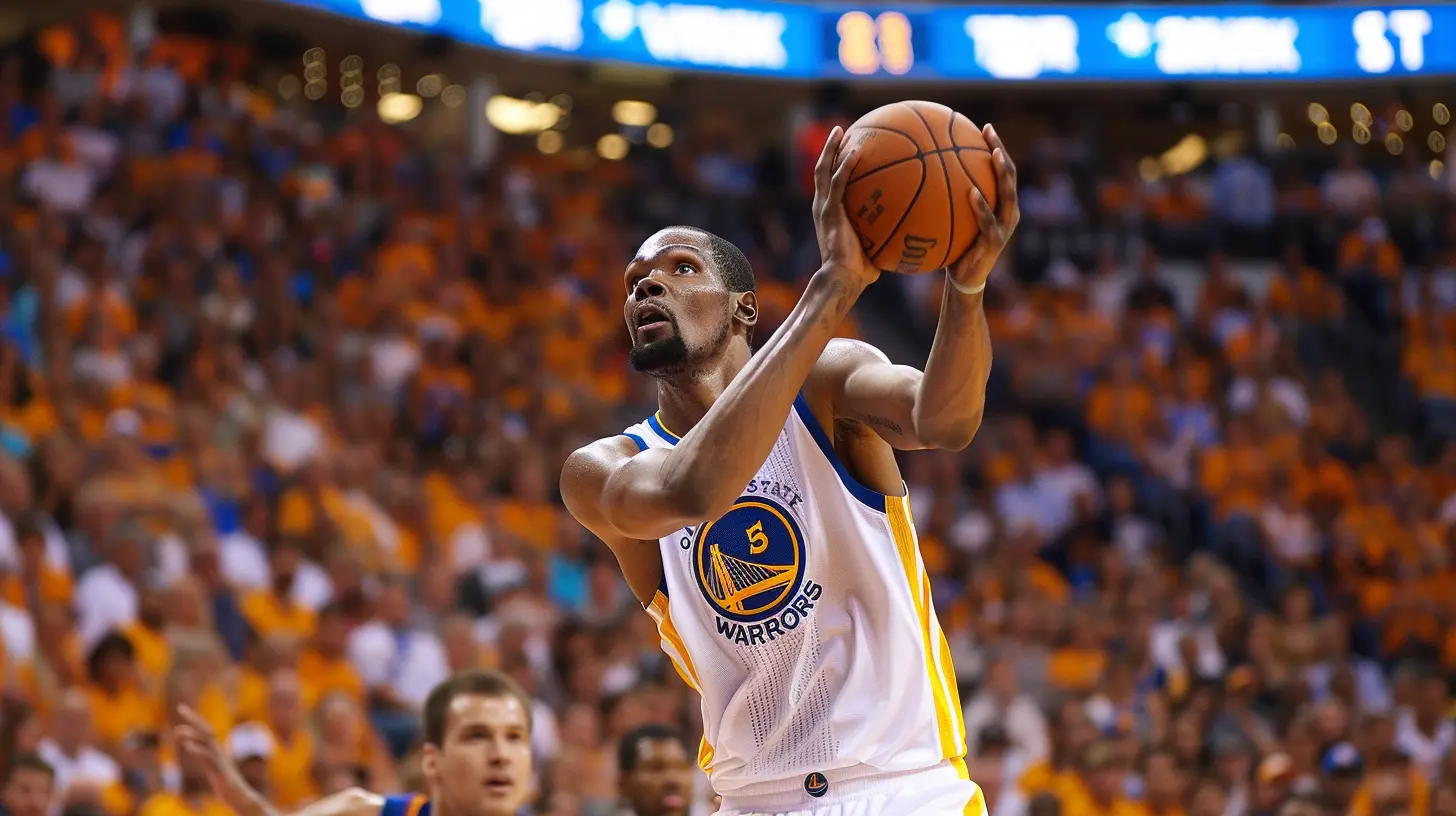
Percentage vs Volume: What Matters More?
Shooting More vs Shooting Better
Let’s get one thing clear—just because you shoot a lot of threes doesn’t mean you’re going to win. Volume helps, sure, but it’s not the whole story. What really matters is how well you shoot 'em.Imagine two teams. Team A takes 40 threes and hits 10 of them—that’s 25%. Team B only takes 30 but drills 15—that’s 50%. Even though Team A jacked up more shots, Team B ended up with more points (45 vs. 30). That’s a 15-point swing just from being more efficient.
So yes, volume matters, but accuracy (that sweet percentage) is the real MVP.
Teams Built Around the Three
The Blueprint of Modern Offense
Think of the Golden State Warriors. They didn’t just win because Steph Curry and Klay Thompson chucked up threes—they hit them at absurdly high rates. Steph is arguably the greatest shooter the game has seen, and his presence alone stretches defenses like taffy in the sun.Houston tried a similar approach during the Harden era under Daryl Morey’s ultra-analytics strategy. The Rockets took more threes than any team in history during that stretch—but what doomed them, especially in high-pressure playoff situations, was cold shooting nights. Remember the infamous Game 7 against the Warriors in 2018? They missed 27 straight threes and lost. Efficiency crumbled, and so did their championship hopes.
Moral of the story? Shooting threes is only sexy if you’re making them.
The Influence on Game Flow and Strategy
Spacing the Floor
High-percentage shooters spread the floor. When defenses have to respect shooters at 25-30 feet, it opens up the paint for cuts, drives, lob passes—you name it. Players like Luka Dončić and Damian Lillard thrive in this ecosystem. One solid shooter in the corner can pull a defender out of the paint, giving slashers the lane they need to operate.Conversely, if your team shoots poorly from deep, defenders can sag off, clog the middle, and dare you to shoot. That kills spacing, flow, and creativity. Suddenly, every offensive possession feels like a grind.
Pace and Offensive Efficiency
Teams that shoot well from three usually play faster. Why? Because transition threes are dangerous weapons. Hit one or two in a row, and you quickly build momentum. Coaches often talk about “rhythm”—and nothing jumpstarts rhythm like a quick three from a hot shooter.Even defensive strategies adapt. Coaches now game plan around stopping opponents’ three-point threats rather than just protecting the rim.
The Analytics Behind It All
True Shooting Percentage (TS%) and eFG%
Advanced stats have changed how we view shooting. Two of the most important metrics? True Shooting Percentage (TS%) and Effective Field Goal Percentage (eFG%).- TS% accounts for free throws and three-pointers, giving a clear picture of a player's total scoring efficiency.
- eFG% adjusts for the fact that threes are worth more than twos.
Players with elite three-point percentages often rank high in both categories. Why? Because hitting threes at a good clip very quickly inflates your efficiency numbers.
As an example, a player who shoots 40% from three has an eFG% of 60% on those shots. Compare that to a player hitting 50% from two (eFG% = 50%), and you see why coaches drool over good three-point shooters.
The Role of Bench Players and Specialists
Snipers Make the Difference
In today’s game, role players who can knock down the long ball are gold. Think about guys like Joe Harris, Duncan Robinson, or even Desmond Bane. They might not be stars, but if they're shooting 40% from deep, they're contributors every single night.A strong bench loaded with decent three-point shooters can swing momentum and keep the starters fresh. And in tight playoff games, one or two timely threes from a bench sniper can be the dagger.
These specialists force defenses to stay honest, even when the second unit is on the floor. That’s a huge asset.
The Downside of Over-Reliance
Feast or Famine
Relying too heavily on the three is like living on a diet of energy drinks and pizza—great when it works, disastrous when it doesn’t.Three-point shooting can be streaky. Even the best shooters go cold sometimes. When that happens and there’s no reliable inside scoring, teams can go minutes without a bucket.
Also, late-game situations often require safer, higher-percentage shots. Living or dying by the three in clutch moments can backfire hard, especially when nerves kick in.
Big Men Are Adapting Too
Stretch Fives and the Modern NBA
It’s not just guards out there launching threes anymore—big men are joining the party. Guys like Karl-Anthony Towns, Kristaps Porziņģis, and Brook Lopez have transformed into quality perimeter threats.This adds another layer to spacing. When a center can step out and hit a three, it drags the opposing rim protector away from the basket, unlocking driving lanes for guards.
Bigs aren’t just back-to-the-basket bruisers anymore—they’re expected to shoot, pass, and space the floor like everyone else.
Playoffs vs Regular Season: Does It Translate?
Small Sample Size, Big Trouble
Here’s where it gets a little tricky. During the regular season, teams have freedom to experiment, rotations are deeper, and defenses are less intense. So shooting percentages tend to be higher.Come playoff time, the game slows down, scouting tightens, and every possession matters. Shooters now have defenders flying at them every time they catch the ball. Suddenly, those clean looks aren’t so clean.
Three-point efficiency often takes a dip in the postseason, and that’s when teams with balanced offenses usually shine. So while great three-point shooting can carry a team through the regular season, it’s not always enough to win a title.
Coaching Philosophy and System Fit
You Can’t Just Plug & Play
Some players shoot better in certain systems. Steve Kerr’s motion offense creates open looks through movement and screens, while Mike D’Antoni’s pace-and-space system leans on quick decision-making and high volume.A shooter who thrives in one system might struggle in another. So when we talk about three-point impact, we also have to consider coaching style and how well players fit within that strategy.
What the Stats Tell Us
Recent seasons have shown a pretty clear trend: teams that shoot a high percentage from three (not just high volume) often land near the top of the standings. Let’s break it down:- In the 2022-23 season, the top five teams in three-point percentage all made the playoffs.
- Of the bottom five teams? Only one cracked the postseason.
It’s not foolproof, but the correlation is undeniable. You shoot well from three? You win more games. End of story.
Wrapping It All Up
So, what’s the bottom line here?Three-point shooting percentages aren’t just a stat—they’re a mirror into a team’s identity. They tell you how well a team can adapt, space the floor, and take advantage of modern offensive strategies. It’s not just about chucking up threes—it’s about making them count.
If your team can shoot efficiently from deep, they’re already a step ahead. If not? Well, they might just get left behind in today’s high-octane NBA.
So the next time you tune into a game and see someone knock down three straight from downtown, just know—there’s a whole world of strategy and impact behind those buckets.
all images in this post were generated using AI tools
Category:
Sports StatisticsAuthor:

Fernando Franklin
Discussion
rate this article
1 comments
Lara Morgan
The article highlights the growing importance of three-point shooting in the NBA, but it overlooks the defensive strategies evolving alongside this trend. Teams that prioritize perimeter defense can disrupt high shooting percentages, suggesting that a balanced approach is crucial for sustained success in today's game.
May 22, 2026 at 4:56 AM
Fernando Franklin
You're right. A balanced approach that includes strong perimeter defense is essential. It's interesting how teams adapt to evolving offensive strategies. Thanks for the insight!