What Sets Apart the Top 10 Teams in Each Major League in 2026
19 April 2026
Let’s be honest—we all love a good underdog story. But year after year, when the dust settles on the marathon of a regular season, it’s usually the same familiar faces, or at least the same type of teams, jockeying for position at the summit of their leagues. By 2026, the landscape of major professional sports will have evolved, yet the fundamental pillars that separate the elite from the merely good will remain strikingly consistent. It’s not just about having the biggest stars or the deepest pockets anymore (though those certainly don’t hurt). The chasm between the top ten and the rest is carved by a more nuanced, interconnected set of principles. So, what’s the secret sauce? What truly sets apart the top 10 teams in the NFL, NBA, MLB, and NHL as we look toward 2026?
It’s a blend of ancient wisdom and cutting-edge innovation. It’s about building a culture so strong it feels like a force field and leveraging data so precise it can predict a player’s next move before he even knows it. Let’s peel back the curtain and look at the core differentiators that will define the elite in 2026.
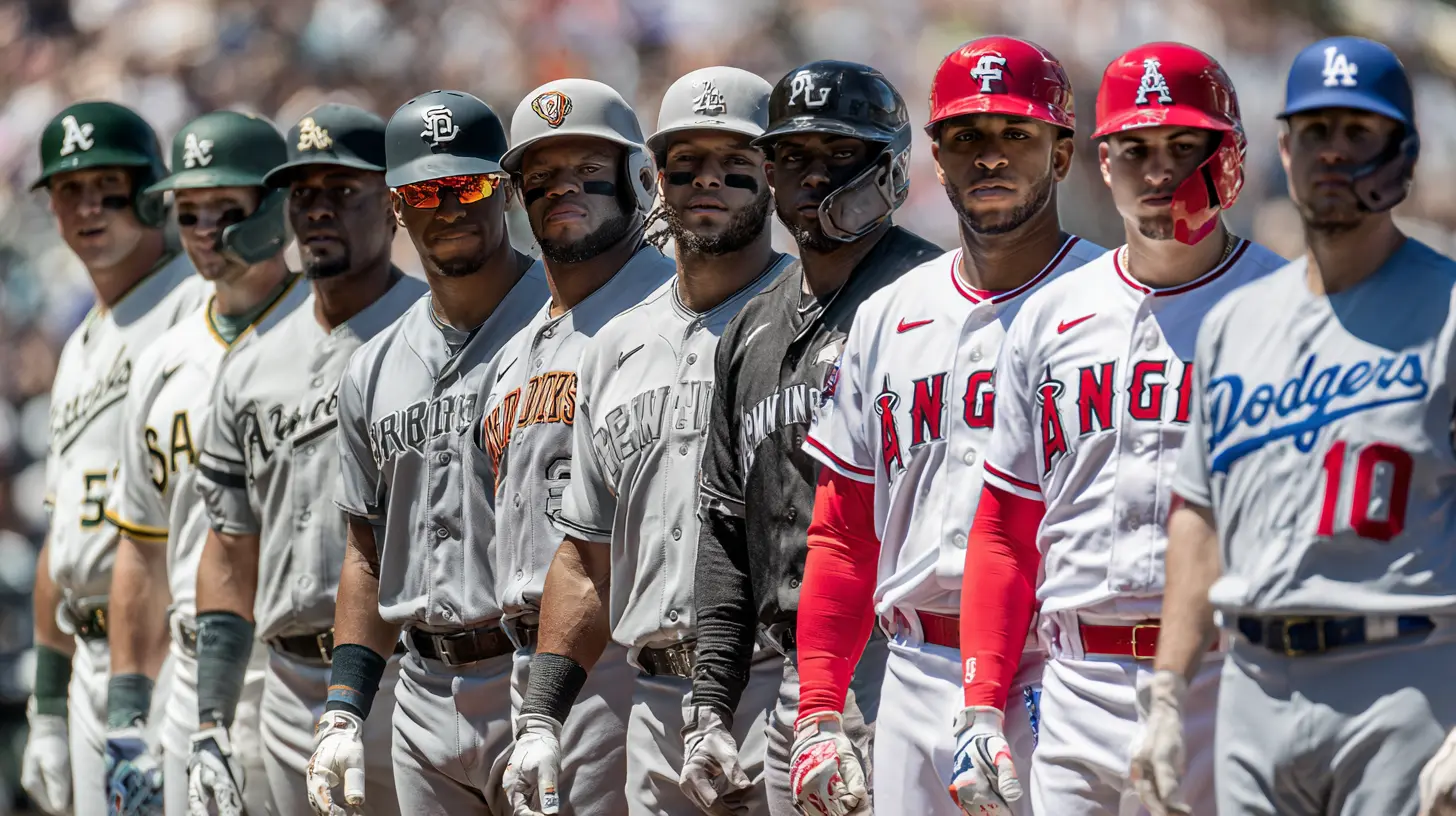
The Unshakeable Foundation: Culture Is Not a Cliché
You’ve heard it a million times: “We have a great culture in the locker room.” Often, it’s just coach-speak. But for the top-tier teams in 2026, culture is the bedrock, the operating system upon which everything else runs. And we’re not talking about pizza parties after a loss.More Than Just Vibes: The Accountability Engine
Think of a championship-caliber culture not as a warm blanket, but as a high-performance engine fueled by radical accountability. In these environments, standards are player-enforced. A rookie can hold a veteran accountable for a missed assignment because the pursuit of excellence is valued above ego or tenure. This isn’t about fear; it’s about shared ownership. When the Kansas City Chiefs or the Golden State Warriors hit a rough patch, you don’t see leaks to the media or finger-pointing. You see players and coaches in closed-door meetings, working it out, because the collective goal is sacred. By 2026, the top teams will have formalized this—through leadership councils, peer-review performance systems, and a flat hierarchy where the best idea wins, regardless of whose jersey it comes from.The “Next Man Up” Philosophy, Supercharged
Injuries are the great equalizer in sports. What separates the contenders from the pretenders is how they handle the inevitable. The elite teams in 2026 won’t just have depth charts; they’ll have plug-and-play ecosystems. This means every backup is prepared not just physically, but systemically, to step in without the overall machine stuttering. How? Through immersive, technology-aided preparation. Using virtual reality, AI-driven playbook simulations, and reps with the first unit in practice, the third-string linebacker or the backup point guard will be mentally ready. The system is the star, and the players are its proficient operators. When a key player goes down, the drop-off for these teams is a slight dip, not a cliff edge.
The Data Revolution: Beyond the Spreadsheet
Analytics have been in sports for over a decade, but by 2026, the divide will be between teams that use data and teams that are inseparable from it. The top franchises will have moved from analytics as a department to analytics as a sixth sense.Predictive Health and Performance
This is the biggest game-changer. The top 10 teams in every league will employ sophisticated AI models that synthesize data from wearable trackers, sleep monitors, nutrition logs, biomechanical scans, and even psychological assessments. This isn’t just about tracking workload; it’s about predicting soft-tissue injuries, optimizing recovery windows, and prescribing individualized training loads. Imagine a system that tells a manager, “Your ace pitcher has a 73% risk of a shoulder strain in his next outing. We recommend a 85-pitch limit and these specific warm-up exercises to mitigate it.” Or one that alerts a hockey coach that a player’s reaction time is 5 milliseconds slower due to travel fatigue. This proactive approach to health will keep star players on the field and extend careers, providing a massive competitive advantage.Tactical AI: The In-Game Chess Master
While humans will always make the final calls, the best coaches in 2026 will have an AI co-pilot. Real-time data feeds will provide insights like: “When Team X runs this offensive set, they score 1.4 points per possession, but they turn it over 22% of the time when pressured from the weak side. Here are the three defensive alignments your team executes best to create that pressure.” This allows for hyper-specific, evidence-based adjustments on the fly. It turns a gut feeling into a data-informed decision. The teams that master this human-AI symbiosis will consistently win the tactical battles in the second half and in crucial moments.
Financial & Roster Alchemy: Building Sustainable Dynasties
The salary cap (or luxury tax) is designed to create parity. The top teams treat it not as a constraint, but as a puzzle to be solved with creativity and foresight.The Draft-and-Develop Imperative
You simply cannot buy a full roster of top talent. The lifeblood of every elite organization is its ability to identify, draft, and develop young players who outperform their contracts. By 2026, the scouting process will be a hybrid of old-school intuition and new-school quantifiable traits. Teams will use biomechanical data to project a college quarterback’s throwing motion durability or machine learning to find undervalued traits in overseas prospects. But the real magic happens in the development phase. The top franchises will have state-of-the-art, personalized player development plans, using everything from cognitive training apps to specialized coaches for every minute skill. Turning a second-round pick into a Pro Bowler is the single most valuable commodity in modern sports.Contract Creativity and Asset Management
The elite front offices are masters of timing and valuation. They know when to extend a homegrown star a year early to get a discount, and they have the cold-bloodedness to trade a beloved player a year too early rather than a year too late. They structure contracts with team-friendly options and use mechanisms like sign-and-trades or cap-space maneuvering to maintain flexibility. They view players not just as athletes, but as appreciating or depreciating assets within a complex financial system. This allows them to constantly refresh their roster, staying young, fast, and cheap in key areas while spending big on proven, culture-aligned superstars.
The Intangible Edge: Where Science Meets Soul
All the data and dollars in the world can’t buy heart, but the best organizations know how to cultivate it.Mastering the Mental Game
In 2026, sports psychology won’t be an optional perk; it will be as integral as the strength and conditioning coach. Top teams will have full-time mental performance staff teaching mindfulness, visualization, pressure inoculation, and focus techniques. They’ll help players develop “cognitive toughness”—the ability to stay process-oriented after a mistake, to silence the noise of a hostile crowd, or to perform in a win-or-go-home scenario. In a world where physical margins are razor-thin, the mental edge becomes the deciding factor. Think of it as the software update that maximizes the hardware’s potential.Cohesion Under Fire: The Trust Fabric
This is the culmination of everything. Culture, preparation, and mental fortitude weave together to create an almost telepathic level of trust on the field. A basketball team knows where a teammate will be after a drive-and-kick without looking. A football secondary adjusts a coverage based on a subtle hand signal. A hockey line makes a line change in perfect sync without a word. This trust isn’t built in games; it’s forged in grueling, competitive practices, in film sessions where everyone is vulnerable, and in shared off-field experiences. It’s the reason these teams look “clutch.” They aren’t hoping someone makes a play; they know the system and each other well enough to expect it.So, as we look ahead to the 2026 seasons across the major leagues, the blueprint for the top 10 is clear. They will be organizations that have successfully merged the human element with the technological revolution. They are places where accountability is cherished, data is a native language, financial decisions are calculated chess moves, and the mental game is trained as rigorously as the body.
They understand that a team is more than a collection of talent; it’s a living, breathing system. And the teams that best optimize every component of that system—from the draft room to the locker room, from the training table to the salary cap spreadsheet—will be the ones whose names we’re debating come playoff time. The game is changing, but the principles of sustainable excellence? Those are timeless.
all images in this post were generated using AI tools
Category:
Team RankingsAuthor:

Fernando Franklin
Discussion
rate this article
1 comments
Oliver Blevins
Talent, strategy, and relentless drive define greatness.
April 19, 2026 at 4:51 AM
Fernando Franklin
Absolutely. Those qualities are essential for success in any competitive field.